

The Modern Kitchen: Smart Furniture for Stylish Spaces
Ever walked into your kitchen and thought, “This space should be working way harder for me”? You’re not alone. 72% of homeowners wish their kitchen had more intelligence built in, not just more counter space.
I’m about to show you how smart furniture for modern kitchens can transform not just how your space looks, but how it actually functions in your daily life.
The marriage of style and technology in kitchen furniture isn’t just a luxury anymore—it’s becoming the standard for anyone who wants their space to work smarter, not harder. From tables that charge your devices to cabinets that track your grocery inventory, the options are endless.
But which smart kitchen investments actually make sense for your lifestyle? The answer might surprise you…
The Evolution of Kitchen Spaces in 2025
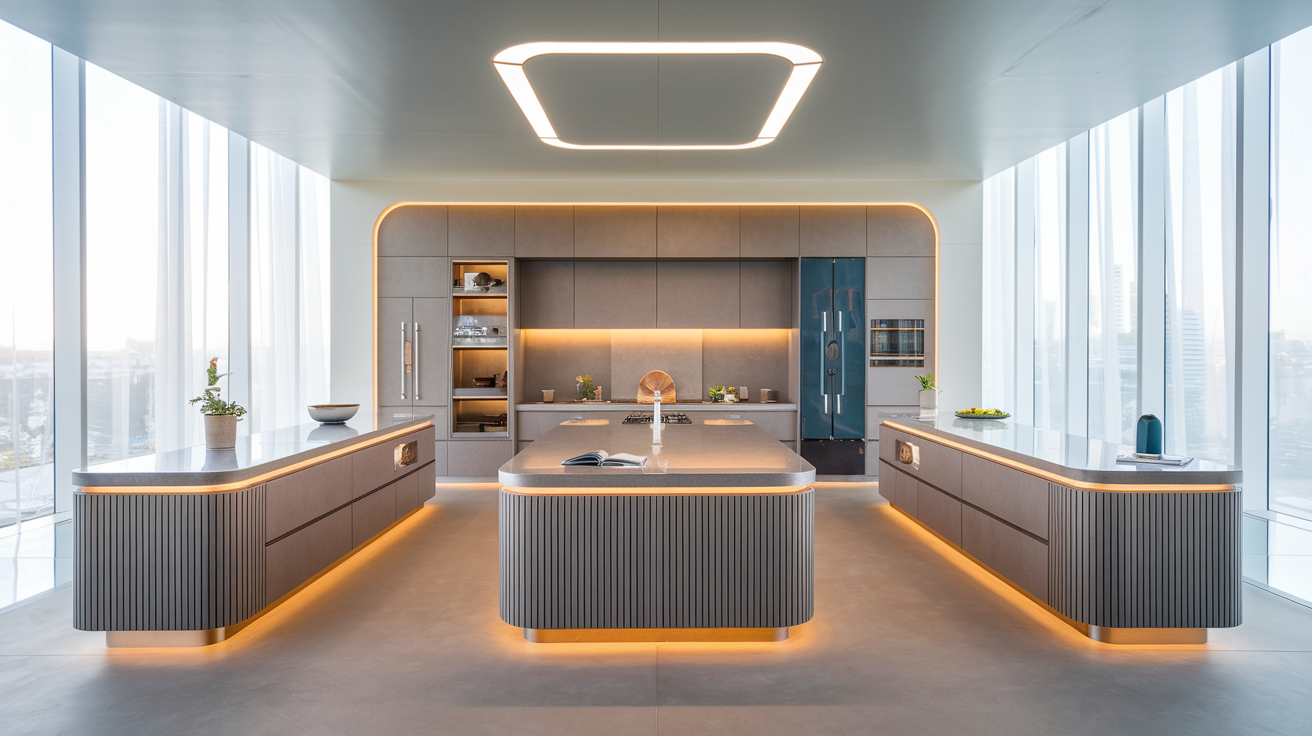
From Functional to Smart: The Kitchen Transformation
Remember when kitchens were just places to cook food? Those days are long gone. In 2025, kitchens have evolved from basic cooking spaces to sophisticated command centers that respond to our every need.
The transformation didn’t happen overnight. First came basic appliances, then came connected devices, and now we’re witnessing truly intelligent kitchen ecosystems. Modern smart refrigerators do more than merely preserve food at low temperatures—they monitor expiration dates, recommend recipes based on available ingredients, and can even order groceries automatically when stock is depleted.
Countertops have gotten a major upgrade too. Touch-sensitive surfaces can now display recipes, timers, and video calls while you chop vegetables. Some even adjust their height automatically based on who’s cooking.
What’s driving this change? Our hunger for convenience, sure, but also our growing tech comfort. We expect our homes to be as responsive as our smartphones, and kitchens are leading this charge.
Today’s Kitchen as the Home’s Central Hub
The kitchen has now officially taken the place of the living room as the central hub of contemporary homes. It’s where we cook, eat, work, socialize, and even entertain.
This central hub status has fundamentally changed how we design kitchen spaces. Open floor plans continue to dominate, but with a twist—flexible zones that can transform from breakfast nook to home office to cocktail bar with minimal effort.
Smart islands have become command centers, featuring built-in charging stations, pop-up screens, and modular components that adapt to different activities. During dinner prep, the island offers extra counter space; during parties, it becomes a self-serve drink station; during workdays, it transforms into a standing desk.
Multi-generational families particularly appreciate this evolution. Grandparents can supervise homework while preparing dinner, parents can join virtual meetings while keeping an eye on cooking timers, and teens can hang out without being completely disconnected from family life.
The Merging of Technology with Traditional Kitchen Design
The most impressive kitchens of 2025 don’t look like spaceships—they seamlessly blend cutting-edge tech with timeless design elements. The key word here is “invisible integration.”
Voice assistants are now built directly into backsplashes and light fixtures rather than sitting on countertops as obvious gadgets. Smart appliances wear traditional clothing—that farmhouse sink? It automatically adjusts water temperature and flow based on what you’re washing. The vintage-looking cabinet handles? They contain biometric sensors that adjust kitchen settings based on who’s present.
This marriage of old and new satisfies both our nostalgia for traditional craftsmanship and our appetite for modern convenience. Warm woods sit comfortably alongside smart glass displays. Handmade tiles house moisture sensors. Copper pots hang above induction cooktops that recognize them and adjust cooking settings automatically.
What’s remarkable is how unobtrusive all this technology has become. The best smart kitchens of 2025 don’t announce their intelligence—they simply work perfectly while maintaining the comfort and aesthetic appeal we crave.
How Modern Aesthetics Shape Kitchen Functionality
Form and function have never been more intertwined than in today’s kitchens. The clean lines and minimalist aesthetics popular in modern design aren’t just about looks—they directly enhance how kitchens perform.
Handleless cabinets with push-open mechanisms reduce touch points (and therefore germ spread), while also creating visual calm. Monochromatic color schemes make it easier to spot dirt and spills, improving hygiene without constant vigilance. Floating shelves don’t just look airy and contemporary—they improve workflow by keeping frequently used items visible and accessible.
Material choices reflect this marriage of beauty and practicality. Composite countertops mimic luxury materials while offering superior heat resistance and antimicrobial properties. Glass backsplashes incorporate subtle display technologies that appear only when needed.
The ultimate achievement in 2025’s kitchen design is creating spaces that perform extraordinarily well while looking effortlessly beautiful. Today’s homeowners want kitchens that work hard without looking like they’re trying too hard—and designers are delivering with solutions that merge stunning aesthetics with incredible functionality.
Must-Have Smart Furniture for the Contemporary Kitchen
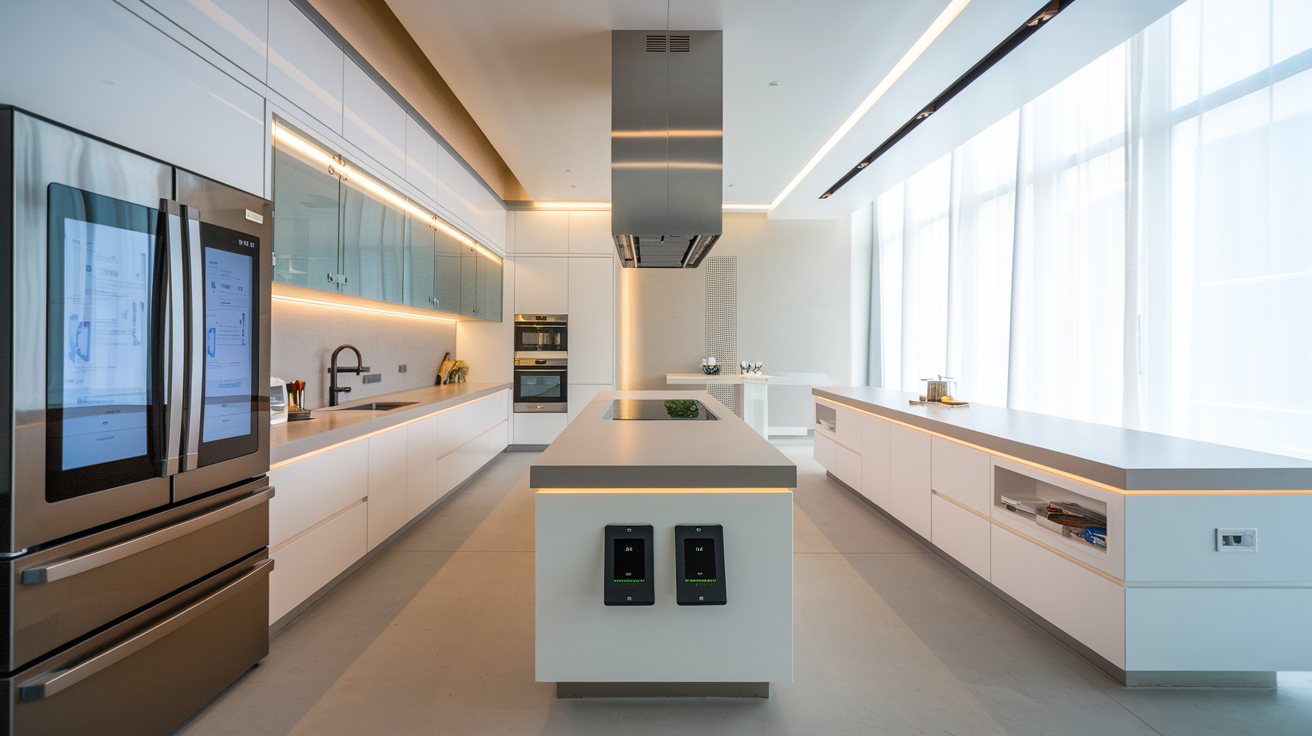
Intelligent Storage Solutions That Maximize Space
Kitchen space is gold, and smart storage is the new currency. Gone are the days of rummaging through cabinets hunting for that one spice jar. Today’s intelligent storage systems know what you need before you do.
Take motorized cabinets that lower themselves to your height with a tap on your phone. No more step stools or climbing on countertops—just press a button and watch those upper shelves come to you.
Or how about drawer organizers that weigh their contents and automatically reorder staples when you’re running low? Your favorite coffee beans will never disappear again.
The coolest thing I’ve seen lately? Rotating corner cabinets with built-in inventory systems. They track what’s inside and tell you through your smart home app. Making a shopping list is suddenly a thing of the past.
And don’t get me started on refrigerated drawers that adjust temperature based on what you store in them. Berries stay fresh longer when the drawer knows they’re berries!
Connectivity-Enabled Countertops and Surfaces
Your countertop isn’t just for chopping anymore. It’s become the brain of your kitchen.
The latest smart surfaces feature embedded touchscreens that display recipes, video tutorials, or your morning news while you prep breakfast. Spill something? No problem—these surfaces are completely waterproof and crumb-resistant.
What blows my mind are the induction countertops that can heat up anywhere you place a pot. No dedicated cooktop needed—just put your pan down, and the surface detects it and heats only that spot.
Some high-end models now include:
- Weight sensors that measure ingredients directly on the counter
- UV sanitizing capabilities that activate when you’re not using the surface
- Wireless charging zones for your devices while you cook
I recently tested a countertop that projects cooking instructions directly onto your work surface, highlighting exactly where to place ingredients and guiding your knife cuts. Ideal for both novice cooks and experienced chefs.
Automated Kitchen Islands With Multi-Functional Features
Kitchen islands have evolved from simple prep spaces to the command centers of modern kitchens.
The smartest islands now change height with voice commands—breakfast bar in the morning, counter-height for dinner prep, and lowered for the kids’ baking projects. One family, multiple cooks, one adaptable island.
Hidden compartments emerge at your command, revealing appliances exactly when needed. Your stand mixer rises from below like a kitchen magician’s trick, then disappears when the cookies are in the oven.
Temperature-controlled drawers within islands are game-changers. Keep your wine at serving temperature, your cheese at the perfect ripeness, and your chocolate at ready-to-eat coolness—all in separate zones with individual climate controls.
Some islands now incorporate:
- Built-in herb gardens with automated watering and lighting
- Voice-activated faucets that dispense exact amounts of water
- Composting systems that are integrated and capable of reducing waste volume by 80%
Smart Seating: Comfort Meets Technology
Kitchen chairs used to be just… chairs. Not anymore.
Today’s smart seating options include barstools with built-in heating elements—perfect for those cold morning breakfasts. Some even remember your preferred temperature settings for each family member.
Posture-correcting chairs are a back-saver for home cooks who spend hours perfecting recipes. These smart seats gently adjust their support throughout the day, preventing the kitchen fatigue that comes from standing at counters.
For the ultimate luxury, check out voice-controlled adjustable seating that transforms from counter height to dining height without lifting a finger. Having friends over? Just ask your chairs to reconfigure for party mode.
The newest models include:
- Integrated foot warmers for chilly mornings
- Weight sensors that track who’s sitting where (and for how long)
- Built-in speakers for personalized audio environments
- Breathable fabrics that regulate temperature based on body heat
Responsive Lighting Systems That Transform Ambiance
Kitchen lighting isn’t just functional anymore—it’s an experience.
Smart lighting systems now adapt throughout the day, matching your circadian rhythm with bright, energizing light in the morning and warmer, relaxing tones in the evening. Your kitchen plays a crucial role in maintaining the regularity of your body clock.
Task-specific lighting activates automatically when you start cooking. Chopping vegetables? Watch as the light intensifies over your cutting board but stays gentle elsewhere. The system knows what you’re doing and responds accordingly.
Color-changing options let you transform your kitchen from productivity space to dinner party venue with a voice command or scheduled preset. “Alexa, dinner party mode” triggers a complete ambiance shift.
The most impressive systems include:
- Motion sensors that light your path to midnight snacks without blinding you
- Recipe-specific lighting that adjusts based on what you’re cooking
- Energy-efficient fixtures that optimize for natural light before supplementing
- UV sanitization modes that activate when the kitchen is empty
Space-Saving Solutions for Kitchens of All Sizes
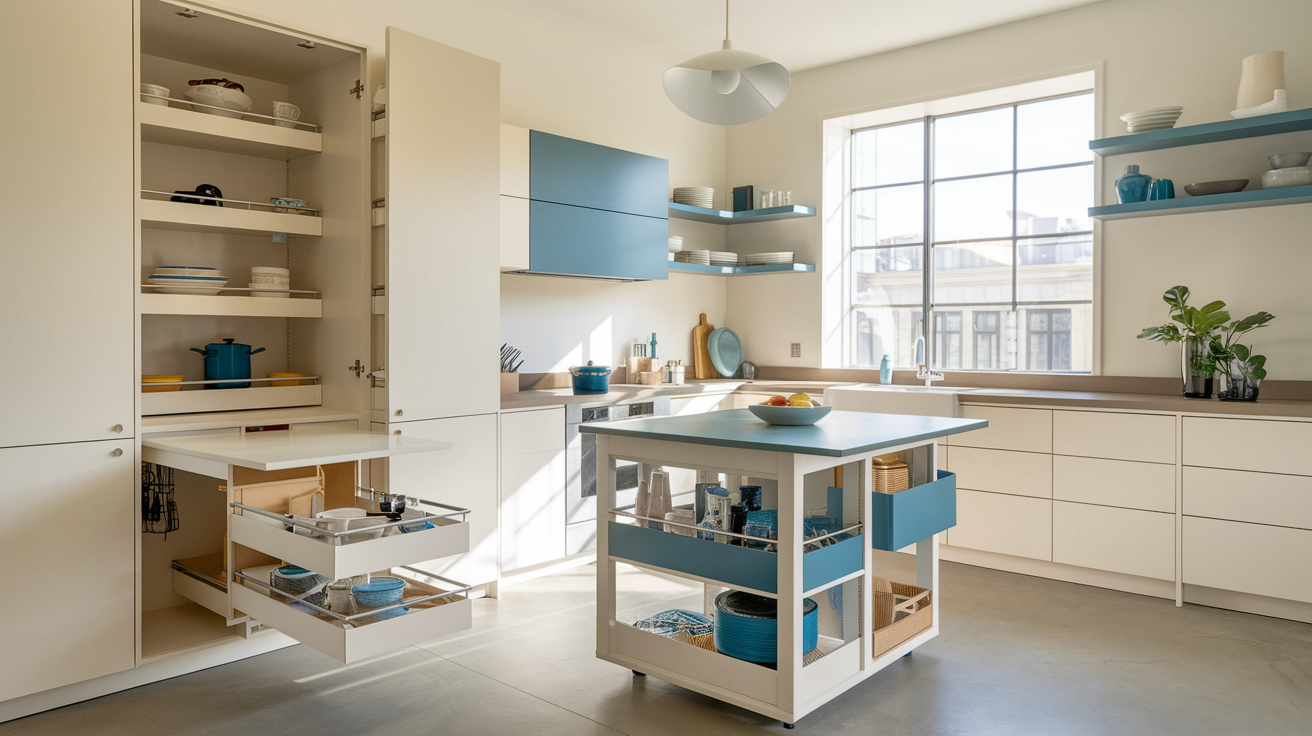
Transformable Furniture for Compact Kitchens
The kitchen area is valuable, particularly in city apartments where every square inch is significant. Transformable furniture is the game-changer you’ve been waiting for.
Take the humble kitchen island. Modern versions now convert from prep stations to dining tables in seconds. Some even include retractable seating that slides neatly underneath when not in use. Genius, right?
Then there are those convertible cabinets that unfold into workstations. Picture this: what looks like a standard cabinet against your wall transforms into a fully functional breakfast bar with storage compartments and built-in outlets.
Nested stools and tables are another space-saving marvel. They stack together when not needed and separate for those times when friends drop by unexpectedly.
Brands like Resource Furniture and Clei lead the charge with tables that rise, lower, extend, or collapse with minimal effort. Their designs prioritize both functionality and aesthetics, so you’re never sacrificing style for practicality.
Wall-Mounted and Foldable Options for Maximizing Floor Space
Wall-mounted furniture is having a serious moment in kitchen design. And honestly, it’s about time.
Fold-down tables attached to walls give you eating space when needed and completely disappear when not. Some models even include built-in storage for utensils or place settings.
Wall-mounted dish racks are revolutionizing drying spaces. They sit above your sink, allowing dishes to drip directly down while freeing up valuable counter real estate.
Hanging pot racks turn your cookware into decorative elements while keeping them accessible. Mount them on walls or ceilings depending on your kitchen’s layout.
Even seating can go vertical with wall-mounted folding chairs. They flatten against your wall when not needed and pull down when guests arrive.
The key to success with wall-mounted options? Sturdy installation. Always locate wall studs or use appropriate anchors—your beautiful fold-down breakfast bar isn’t much good if it pulls away from the wall!
Modular Kitchen Components That Grow With Your Needs
Modular kitchens are the ultimate “future-proof” solution. They adapt as your lifestyle changes, preventing costly renovations down the road.
Individual cabinet units that can be reconfigured let you adjust your layout without replacing everything. Moving to a new home? Your kitchen can come with you.
Stackable storage systems grow vertically when horizontal space is limited. Start with base units and add components as needed.
Interchangeable countertops and backsplashes allow for style updates without structural changes. Tired of that butcher block? Replace it with quartz without causing any disruption to your entire kitchen.
Companies like IKEA and Reform offer systems where cabinets, drawers, and organizational elements can be mixed, matched, and rearranged. Their modular approach means you’re never stuck with a layout that doesn’t work.
The elegance of modular design is found in its adaptability. Your kitchen becomes less of a fixed installation and more of a living space that evolves with your changing needs.
Sustainable Smart Kitchen Furniture Trends
A. Eco-Friendly Materials Leading the Market
The kitchen furniture industry is having a serious green awakening right now. In 2025, we’re seeing bamboo dominate the smart kitchen scene – and for good reason. This super-renewable material grows like crazy (up to 3 feet in 24 hours!) while absorbing more carbon dioxide than hardwood trees.
Recycled metals are making a huge splash too. That sleek smart refrigerator? Probably contains about 75% recycled aluminum, saving roughly 95% of the energy needed to produce new aluminum.
Cork is another star player. Beyond wine stoppers, it’s becoming the go-to for kitchen flooring that pairs with smart systems. It’s naturally antimicrobial, sound-absorbing, and harvested without killing a single tree.
Check out these impact numbers:
| Material | Carbon Footprint Reduction | Renewable Timeline |
|---|---|---|
| Bamboo | 70% less than traditional hardwood | Regenerates in 3-5 years |
| Recycled Metal | 95% energy savings | Infinitely recyclable |
| Cork | Carbon negative | Harvested every 9 years |
B. Energy-Efficient Smart Furniture Options
Smart kitchen furniture isn’t just about looking cool while connecting to your phone. The real game-changer is how these pieces slash your energy bills.
Consider induction cooktops, which boast an energy efficiency of 85-90%, in contrast to gas stoves that squander approximately 60% of their energy. These babies heat only your cookware, not your entire kitchen.
Smart refrigerators with adaptive cooling systems are cutting electricity use by up to 40%. They learn your usage patterns and adjust cooling power accordingly, ramping down during those midnight hours when nobody’s grabbing a snack.
Even kitchen islands are getting the energy-efficient treatment. The newest models feature built-in wireless charging stations powered by kinetic energy harvested from everyday kitchen activities. That drawer you just closed? It just charged your phone a little.
LED-integrated cabinetry provides task lighting exactly where you need it, using 75% less energy than those old halogen systems from 2020.
C. Longevity-Focused Design: Reducing Furniture Turnover
Remember when kitchen renovations happened every 7-10 years? That wasteful cycle is breaking.
Today’s smart kitchen furniture is built with modular designs that evolve with technology. That expensive smart island you just bought? Its tech components can be swapped out as innovations emerge, without scrapping the entire piece.
Self-healing surfaces are changing the game too. Tiny scratches?
Disappearing by morning, due to polymer technologies that react to temperature fluctuations, effectively repairing minor damages overnight.
Intelligent cabinets are now equipped with lifetime warranties and standardized connectivity ports intended to support future technological standards.
The 2025 cabinet connects seamlessly with both current apps and includes backward compatibility with older smart home systems.
Manufacturers are finally embracing the right-to-repair movement too. Major brands now provide detailed repair manuals, replacement parts, and even virtual repair assistance, extending furniture lifespan by an estimated 15+ years.
D. Water Conservation Features in Modern Kitchen Fixtures
Kitchen water waste is becoming a thing of the past. Smart faucets now reduce water consumption by an impressive 60% through precision aeration and motion-sensing technology that delivers exactly what you need.
Dishwashers integrated into smart kitchen islands use AI to optimize water usage based on load size and dish type. The latest models recycle rinse water for the next load’s pre-wash cycle, saving roughly 700 gallons annually for the average family.
Even refrigerators are joining the water-saving revolution with condensation reclamation systems. That moisture your fridge collects? It’s now routed to planters for your kitchen herbs or used for ice production.
Smart sink systems with gray water recycling are becoming standard in high-end kitchens, directing used water from vegetable washing directly to under-sink planters or outdoor irrigation systems.
The coolest development? Humidity-harvesting cabinet systems that extract moisture from the air during cooking, condensing it into clean water for plants or drinking. Talk about creating something from nothing!
Styling Your Smart Kitchen: Design Approaches
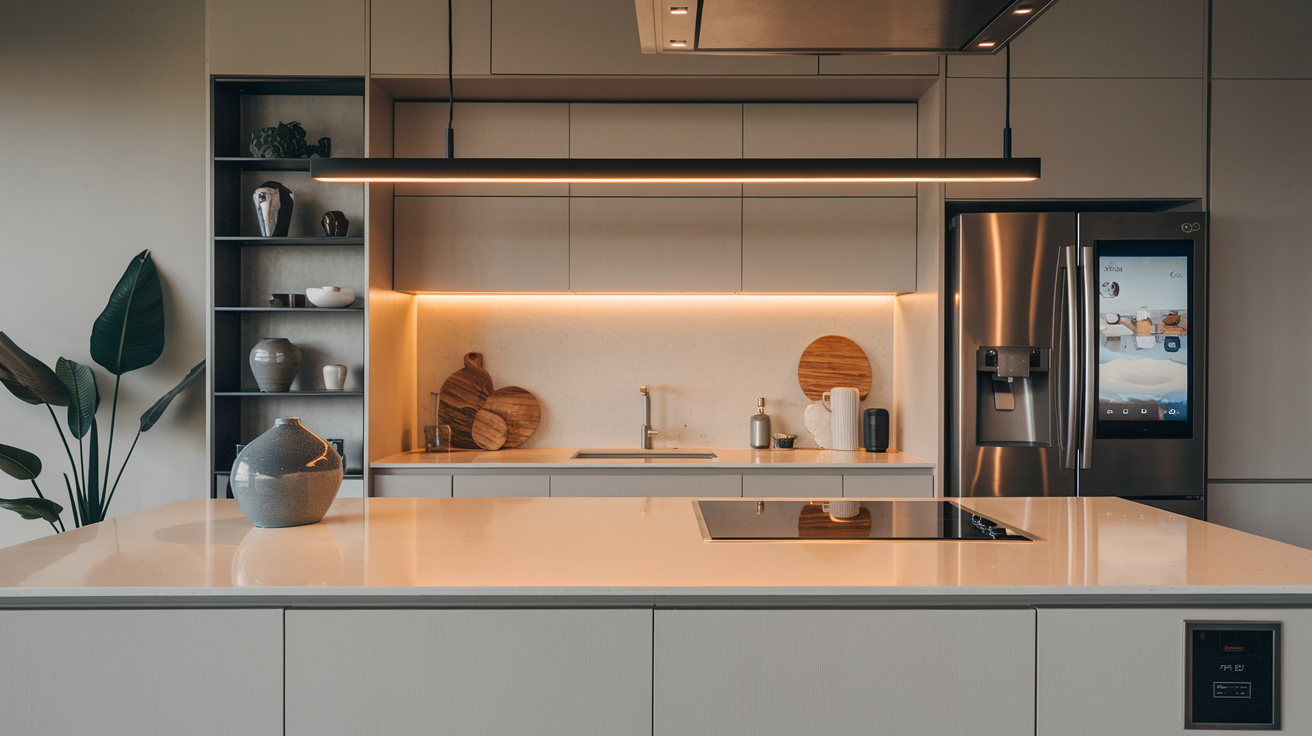
Minimalist Smart Kitchens: Less Visual Clutter, More Functionality
Gone are the days when a kitchen needed to scream “tech” with blinking lights and visible gadgets. Today’s minimalist smart kitchens hide their brains behind beautiful facades.
Think seamless cabinetry that conceals refrigerator drawers you can open with a tap of your foot.Alternatively, countertops featuring integrated wireless charging capabilities that energize your devices without the clutter of cords. The trick? Everything has its place—and that place is usually hidden.
White and neutral palettes dominate these spaces, creating a canvas where the occasional pop of color feels intentional rather than chaotic. Smart lighting systems adjust automatically throughout the day, eliminating the need for visible switches that break up wall space.
The beauty of minimalist smart kitchens is how they respond to you without shouting for attention. Voice-activated faucets and motion-sensing cabinet doors eliminate handles altogether. Even exhaust hoods retract into ceilings when not needed.
Industrial-Tech Fusion: Raw Materials Meet Advanced Technology
Industrial-tech kitchens embrace the contrast between exposed elements and cutting-edge technology. Think concrete countertops housing touch-sensitive controls or weathered wood cabinets concealing automated storage systems.
These kitchens don’t hide their tech—they celebrate it. Exposed copper piping might run alongside fiber optic cables. Edison bulbs share space with color-changing smart lighting. The magic happens in the tension between old and new.
Black stainless steel appliances with touchscreen interfaces stand out against reclaimed brick walls. Open shelving displays both vintage cookware and modern smart devices. It’s a deliberate collision of worlds that creates visual interest.
What makes this style work is thoughtful integration. That vintage factory pendant light? It’s actually housing a smart speaker and ambient light sensor. The massive butcher block island? Underneath it’s wired with USB ports and induction charging.
Scandinavian Smart: Warmth Within High-Tech Environments
Scandinavian smart kitchens solve the biggest problem with tech-heavy spaces—they can feel cold and impersonal. By blending natural materials with smart functionality, these kitchens stay cozy while remaining cutting-edge.
Light wood tones dominate, with oak, ash, and pine providing warmth that balances sleek tech elements. Smart refrigerators with wood panel fronts blend seamlessly with cabinetry. Even digital displays are often framed in wood or set against textured backdrops.
Textiles play a huge role too. Think wool runners with embedded pressure sensors that trigger lighting changes, or linen curtains that automatically adjust based on sunlight levels. These soft elements make technology feel like a natural part of the home.
The Scandinavian approach also embraces functional minimalism. Smart storage solutions like motorized cabinets that lower at the touch of a button eliminate the need for step stools while maintaining clean lines.
Personalization Options for Smart Kitchen Elements
Smart kitchens should reflect who you are—not just what technology can do. Customization options have exploded beyond simple color choices.
Digital backsplashes now change patterns based on season, mood, or who’s cooking. Smart countertops can display your family’s favorite recipes when triggered by specific ingredients placed on them. Even the lighting can be programmed to your chronotype, brightening with cool tones for morning people or offering warmer illumination for night owls.
Audio experiences are increasingly personalized too. Multi-zone systems recognize family members and play their preferred cooking soundtracks. Some even offer guided cooking experiences with voice assistants that adjust their speaking pace to match how quickly you typically work.
The most exciting developments are in environmental controls. Smart kitchens now learn your preferences—automatically adjusting exhaust fan strength based on what you’re cooking or pre-heating specific areas of the counter where you typically plate food.
Budgeting for Your Smart Kitchen Upgrade

Investment Priorities: Which Smart Features Deliver Most Value
Not all smart kitchen upgrades are created equal. Some will transform your daily life while others might just be fancy toys that collect dust.
The game-changers? Smart refrigerators with inventory tracking save the average family $500 annually by reducing food waste. Connected faucets cut water usage by 30%. And programmable coffee makers that sync with your alarm clock? Pure morning bliss.
Avoid the intelligent egg trays and Bluetooth-enabled salt shakers. Truly. They’re cool at parties for about five minutes.
Focus your budget on:
- Smart storage solutions with motion-activated lights
- Voice-controlled pantry systems
- Self-adjusting kitchen islands with height customization
- Energy management systems that track and optimize appliance usage
The sweet spot? Features that save time, reduce waste, or make your space more accessible.
Phased Implementation Strategies for Budget-Conscious Renovations
Kitchen renovations don’t have to break the bank all at once. Think marathon, not sprint.
Phase 1 (Months 1-3):
Start with the infrastructure – smart lighting and outlets. They’re relatively inexpensive but create the foundation for future upgrades. Budget: $300-800.
Phase 2 (Months 4-6):
Add modular storage solutions that can be expanded later. Think adjustable shelving with built-in inventory systems. Budget: $1,200-2,500.
Phase 3 (Year 1-2):
Incorporate larger statement pieces like a smart island or table with integrated charging and temperature control. Budget: $3,000-7,000.
Many manufacturers offer “smart-ready” furniture that can be upgraded later. These pieces come standard now but have ports and spaces designed for future tech integration.
The three-year plan beats the “all at once” approach every time. Your wallet will thank you, and you’ll avoid tech that’s obsolete before you’ve even figured out how to use it.
Return on Investment: Smart Features That Boost Home Value
The kitchen sells the house. It’s been true forever, but now it’s about more than granite countertops.
According to the 2025 Remodeling Impact Report, smart kitchens return 85-92% of investment at resale – significantly higher than traditional renovations (70-75%).
Top value-adding features:
| Feature | Average ROI | Buyer Appeal |
|---|---|---|
| Energy management systems | 94% | High |
| Smart storage solutions | 89% | Very High |
| Automated lighting | 87% | High |
| Modular, adaptable spaces | 85% | Very High |
| Voice-controlled appliances | 78% | Medium |
The key? Focusing on tech that solves genuine problems rather than gimmicks. Homebuyers are becoming savvier about distinguishing between useful innovation and pointless gadgetry.
Interestingly, features that adapt to multiple users (height-adjustable counters, personalized lighting scenes) score particularly high with younger buyers, who often share homes longer before starting families.
Cost Comparison: Custom vs. Ready-Made Smart Furniture
The eternal dilemma: custom-built or off-the-shelf? For smart kitchens, the answer isn’t straightforward.
Ready-made solutions have come a long way. Major retailers now offer surprisingly sophisticated smart furniture lines at price points that won’t make you faint.
| Aspect | Custom | Ready-Made |
|---|---|---|
| Initial Cost | $15,000-40,000 | $7,000-20,000 |
| Customization | High | Limited |
| Update Capability | Variable | Often Better |
| Integration | Perfect | Sometimes Clunky |
| Installation Time | 4-12 weeks | 1-3 days |
The surprise winner in many categories? Ready-made. Why? The big manufacturers are pouring millions into R&D, resulting in systems that update automatically and play nice with other smart home components.
Custom solutions shine for unusual spaces or specific needs, but they often lack the ongoing software support that mass-market products receive.
The sweet spot might be semi-custom – ready-made frameworks with custom elements for your specific space. You get the reliability of established tech with the perfect fit of custom work.
The modern kitchen has transformed dramatically, evolving from a purely functional space to a sophisticated hub where technology and design converge seamlessly. From space-saving solutions that maximize even the smallest kitchens to sustainable furniture trends that prioritize eco-friendly materials and energy efficiency, today’s smart kitchens offer unprecedented convenience without sacrificing style. Whether you’re incorporating modular units, investing in multifunctional appliances, or embracing sustainable options, the possibilities for creating a kitchen that reflects both your aesthetic preferences and practical needs are virtually limitless.
As you embark on your smart kitchen upgrade journey, remember that transformation doesn’t have to happen all at once. Start with the elements that will make the most significant impact on your daily life, and build from there based on your budget and priorities. The kitchen of 2025 is no longer just about cooking—it’s about creating a space that enhances your lifestyle through thoughtful design, cutting-edge technology, and personalized touches that make it uniquely yours. Your smart kitchen awaits—what will you create?
The Modern Kitchen: Smart Furniture for Stylish Spaces By:
By:
